Homeschooling vs Traditional School in India
A calm, balanced comparison for Indian parents weighing home learning against regular school — no hype, no fear, just the real trade-offs.
Neither wins universally: school offers structure and built-in peers; homeschooling offers pace, depth and family time. The right answer depends on your child, your household and your season of life.
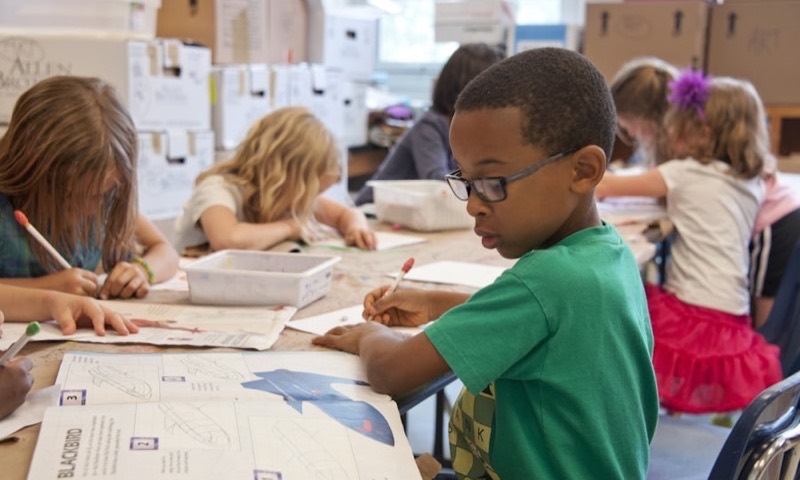
If you are weighing homeschooling vs traditional school in India, you are probably not chasing a trend. More often, you are a parent watching a child who is bored, anxious, or simply not thriving in a classroom of forty — and you want to know, honestly, whether home learning is a real option or a risky gamble. This guide lays out the genuine pros and cons of both, without selling you anything. Some children flourish at home; others do far better in school. The goal here is to help you tell which is which for your family.
Two valid paths, not a war
It is easy to find loud opinions online: homeschooling is "the only way to protect your child," or it will "ruin them for the real world." Both extremes are wrong. Traditional school works beautifully for millions of Indian children. Homeschooling, usually paired with a board like NIOS (the National Institute of Open Schooling, the Government of India's open-schooling board, whose Class 10 and Class 12 certificates are treated as equivalent to other national boards), works beautifully for many others.
The honest starting point is this: no Indian law forces a child into a formal school, and NIOS is a well-established route to recognised certification. (This is general guidance, not legal advice.) If you want the legal picture in detail, read is homeschooling legal in India. With that settled, the real question is not "which is allowed?" but "which fits this child, this family, right now?"
The socialisation myth, head-on
This is the first worry almost every parent raises, so let us tackle it directly. The fear is that a homeschooled child will be isolated, awkward, or unable to "deal with the real world." In practice, school socialisation and real-world socialisation are not the same thing.
A classroom puts a child with thirty same-age peers for most of the day, in a setting where talking is often discouraged. That is one kind of social experience — valuable, but narrow. Homeschooled children typically socialise differently: across age groups, with neighbours, cousins, sports teams, music and art classes, co-op groups, and community activities. The skill is not lost; it is sourced elsewhere.
That said, socialisation does not happen automatically at home. It is something the parent has to plan for actively. If you are not willing or able to build a social life around your child — classes, groups, regular meet-ups — then school's built-in social structure is a genuine advantage you should weigh heavily.
"In my years around schools, I have rarely met a 'lonely homeschooler.' What I have met are families who forgot that socialising at home has to be planned, not assumed. Plan it, and your child does just fine." — Vishwajith Singh, founder of Chigurus
Ask Vishwajith directly — a free 15-minute call, in your time zone. Honest answers, no script, no pressure.
Book your free callAcademics: depth versus structure
Traditional school gives you structure: a fixed syllabus, trained teachers, exams, peer benchmarking, and a clear progression. For many children — and many busy parents — that structure is exactly what keeps learning on track. The trade-off is pace. School moves at the speed of the average, which can leave a quick learner restless and a slower learner quietly drowning.
Homeschooling flips this. The pace bends to the child. A student strong in maths can race ahead; one who struggles with reading can take the extra months they need without shame. With NIOS, you also get subject flexibility and exam windows that suit the learner rather than the calendar. The trade-off is responsibility: you become the one ensuring the academics actually happen, with discipline and a plan.
If the NIOS route appeals, our NIOS admission guide and the comparison in NIOS vs CBSE explain how the board works in practice. You can also map out your child's path step by step using our free NIOS roadmap toolkit.
Flexibility and wellbeing
This is where homeschooling often shines brightest. Learning can fit the child's natural rhythm, real life (travel, family business, illness) stops derailing education, and there is room to follow genuine interests deeply. For an anxious child, leaving a stressful classroom can feel like coming up for air.
But flexibility cuts both ways. Without a timetable imposed from outside, some families drift. Days blur, lessons slip, and "we'll do it tomorrow" becomes a habit. Flexibility is a gift only when paired with self-discipline. For more on building that rhythm, see how to start homeschooling in India.
The honest pros and cons of homeschooling in India: cost and parent time
Two practical factors decide more cases than parents expect, and they belong at the centre of any honest list of the pros and cons of homeschooling in India.
Cost
Homeschooling is not automatically cheaper. You save on school fees, uniforms, transport, and many "extras." But you may spend on books, online courses, tutors for tricky subjects, activity classes for socialisation, and exam-board charges. We deliberately do not quote exact NIOS fees here, because they change — always verify current fees and dates on the official site, nios.ac.in. The bigger hidden cost is often a parent's reduced earning if one of you steps back from work.
Parent time and energy
This is the single most underrated factor. Homeschooling asks for real, sustained time and emotional energy, especially in the early years. If both parents work long hours and there is no support at home, school may simply be the more realistic choice — not a lesser one. Be honest about your capacity before you commit.
When traditional school is the better choice
A balanced guide has to say this plainly. School is often the better fit when:
- Both parents work full-time and there is no one to anchor daily learning.
- Your child genuinely loves the social and structured side of school.
- You need the external discipline of timetables, teachers, and exams to keep things moving.
- Your local school is strong and your child is thriving there — "if it isn't broken" is wise advice.
Choosing school is not a failure of ambition. For many families it is the calm, sensible, loving decision.
So, homeschooling vs traditional school — which is right for you?
There is no universal winner. Homeschooling offers pace, flexibility, and a tailored, lower-stress environment, but demands parent time, planning, and self-discipline. Traditional school offers structure, ready-made social life, and trained teachers, but moves at the average pace and can be hard on children who do not fit its mould.
The right answer depends on your child's temperament, your family's capacity, and what is actually going wrong (or right) today. If you would like to think it through with someone calmly, you can book a free discovery call, explore our personalised consulting plans, or browse frequently asked questions. Whatever you choose, choose it for your child — not out of fear.
Open schooling vs regular schooling — and the "looked down upon" question
In many Indian households this debate arrives with different words: not "homeschooling versus school" but open schooling versus regular schooling — usually from a relative, usually with a frown. So let me answer the question behind the question: is NIOS looked down upon?
Socially? Sometimes, by people who last checked the facts twenty years ago. Officially? No. NIOS is a national board set up by the Ministry of Education; its certificates are used for university admission and competitive exams by lakhs of learners. Universities process NIOS applications as routine, not as exceptions. What actually gets judged, in admissions and in life, is what the student can do — the portfolio, the entrance score, the interview.
The honest social reality: you may field the same three questions at every family function for a year or two. Families who thrive treat it lightly — one calm sentence about recognition, one about the child's progress, and a change of subject. By the time the results come, the questions usually stop on their own.
Frequently asked questions
Neither is universally better. Homeschooling suits children who need a flexible pace and lower-stress environment and families with time to plan it; traditional school suits children who thrive on structure and social routine, or families where both parents work full-time.
Not if you plan for it. Homeschooled children socialise through neighbours, cousins, sports, music and art classes, co-ops and community groups. The social skills are not lost, but they have to be built deliberately rather than left to the classroom.
Yes. No Indian law compels a child into a formal school, and homeschooling via a recognised board like NIOS is a well-established route. This is general guidance, not legal advice — see our dedicated article on the legal position for details.
Not always. You save on school fees, uniforms and transport, but may spend on books, online courses, tutors, activity classes and exam-board charges. The biggest hidden cost is often a parent reducing paid work to be available.
NIOS is the Government of India's open-schooling board, and its Class 10 and Class 12 certificates are treated as equivalent to other national boards. It is the most common certification route for homeschooling families. Verify current fees and dates on nios.ac.in and use our free NIOS roadmap toolkit to plan.
Officially, no — NIOS is a recognised national board under the Ministry of Education, and universities process its certificates routinely. Social scepticism exists but fades quickly once results arrive; what admissions actually weigh is the student's marks, portfolio and entrance performance.
Not sure where your family fits?
Book a free 15-minute discovery call. We'll talk through your child, answer your questions, and tell you honestly whether homeschooling is the right move.
Book a free discovery call